Skip to content

Many people search for a permanent cure for psoriasis, but the truth is that psoriasis is a chronic autoimmune condition that currently has no proven permanent cure. However, with the right treatment plan, lifestyle adjustments, and regular care from a dermatologist, many people can achieve long periods of remission and effectively manage their symptoms.
Psoriasis is not simply a skin ailment. For many people, it can affect confidence, daily comfort, and overall quality of life. Persistent itching, red patches, flaky skin, and recurring flare-ups often leave patients wondering whether there is a lasting solution. It’s no surprise that one of the most common questions people ask online is “How to cure psoriasis permanently?”
The honest answer is that there is currently no medically proven permanent cure for psoriasis. However, that doesn’t mean you have to live with constant symptoms. Thanks to advances in dermatology, many people can successfully control through proper psoriasis treatment in Islamabad, reduce flare-ups, and enjoy long periods where their skin remains clear or significantly improved. Early diagnosis, the right treatment, and ongoing care play an important role in achieving the best possible outcomes.
If you’re experiencing persistent psoriasis symptoms, consulting a qualified dermatologist can help identify the type and severity of your condition and create a personalized treatment plan tailored to your needs.
What Is Psoriasis?
Psoriasis is a chronic autoimmune skin condition that causes the body’s immune system to speed up the growth cycle of skin cells. Normally, skin cells take several weeks to develop and shed naturally. This process occurs far more quickly in psoriasis sufferers, resulting in an accumulation of skin cells on the surface.
This build-up creates thick, raised patches of skin that are often red, inflamed, and covered with silvery-white scales. These patches, commonly called plaques, may itch, crack, or become sore, depending on the severity of the condition.
Although psoriasis primarily affects the skin, it is an immune-mediated condition that can also impact the nails, scalp, and joints. Some people develop psoriatic arthritis, which causes joint pain, stiffness, and swelling alongside skin symptoms.
One of the most important things to understand is that psoriasis is not contagious. You cannot catch it from another person through touch, sharing personal items, or close contact.
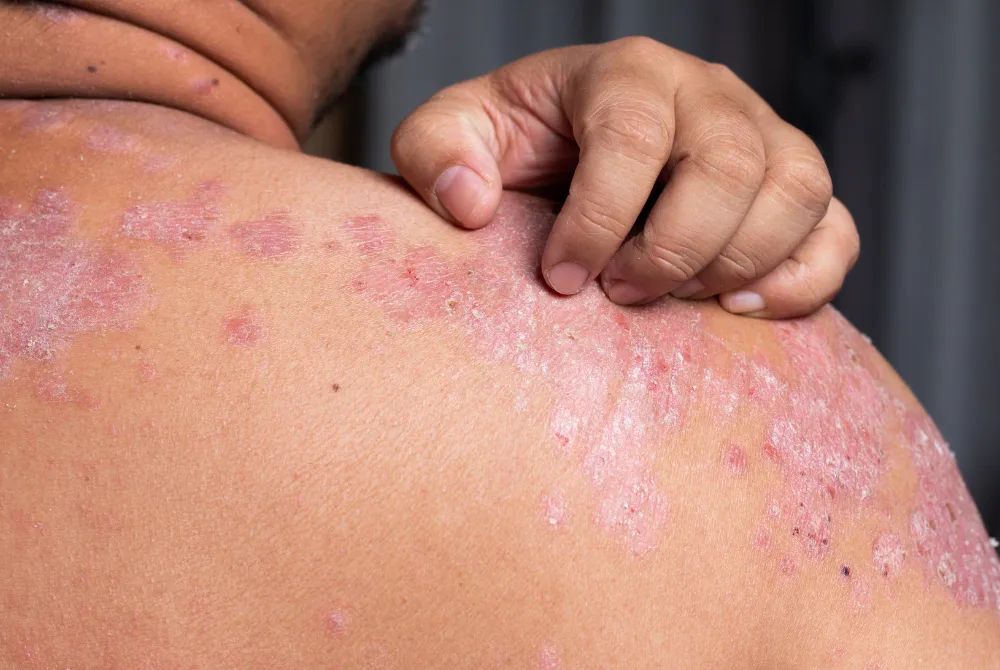
Common Symptoms of Psoriasis
Each person experiences symptoms differently, and they may appear and disappear over time. Some individuals experience mild flare-ups, while others develop more widespread or persistent plaques.
Common symptoms include:
- Raised red patches covered with silvery scales.
- Dry, cracked skin that may bleed.
- Persistent itching or burning sensations.
- Thickened or discolored nails.
- Scalp flaking that resembles severe dandruff.
- Painful skin cracks in affected areas.
- Joint pain or stiffness in some patients.
Symptoms often improve for a period before returning, which is known as a psoriasis flare-up. Some skin conditions can resemble psoriasis. Read about our Eczema Treatment.
Different Types of Psoriasis
Psoriasis is not the same for everyone. Identifying the specific type helps dermatologists recommend the most appropriate treatment.
Plaque Psoriasis
The most prevalent type of psoriasis is this one. It appears as thick, red patches covered with silvery scales and typically affects the elbows, knees, scalp, and lower back.
Scalp Psoriasis
Scalp psoriasis can range from mild flaking to thick plaques covering large areas of the scalp. It often causes itching and may sometimes be mistaken for dandruff.
Guttate Psoriasis
This type appears as numerous small, drop-shaped spots on the skin and is more common in children and young adults. It may develop after certain infections, particularly strep throat.
Inverse Psoriasis
Inverse psoriasis affects skin folds such as the underarms, groin, and beneath the breasts. Instead of thick scales, it usually appears as smooth, shiny, inflamed patches.
Pustular Psoriasis
A less common form characterized by white, pus-filled blisters surrounded by red skin. It requires prompt medical evaluation.
Erythrodermic Psoriasis
This is a rare but serious form that causes widespread redness, peeling, and inflammation across much of the body. It requires immediate medical attention.
How to Cure Psoriasis Permanently: Is It Really Possible?
This is one of the most frequently searched questions by people living with psoriasis that how to cure Psoriasis Permanently and it’s understandable why. Managing a lifelong skin condition can be physically and emotionally challenging, leading many patients to hope for a treatment that eliminates the disease forever.
The current medical evidence shows that there is no permanent cure for psoriasis. Because psoriasis is an autoimmune condition influenced by genetics and immune system activity, it cannot currently be cured completely.
However, this does not mean that effective treatment isn’t available.
Modern dermatology offers a wide range of therapies that can:
- Reduce inflammation.
- Slow excessive skin cell growth.
- Relieve itching and discomfort.
- Improve the appearance of plaques.
- Extend periods of remission.
- Reduce the frequency and severity of flare-ups.
- Improve overall quality of life.
Many patients experience significant improvement after following a personalized treatment plan developed by an experienced dermatologist. Some achieve long-lasting remission where symptoms remain well controlled for months or even years, although flare-ups can still occur.
It’s also important to be cautious of products or advertisements claiming to provide a “100% permanent cure for psoriasis.” At present, no scientifically proven treatment can permanently eliminate psoriasis. Clinics or products making such promises should be viewed with caution.
Instead of searching for miracle cures, patients should focus on receiving an accurate diagnosis, understanding their triggers, and following evidence-based treatment under the guidance of a qualified dermatologist. This approach offers the best chance of keeping psoriasis under control and maintaining healthier skin over the long term.
Can Psoriasis Go Into Remission?
Yes. Although psoriasis cannot be permanently cured, many people experience remission, a period during which symptoms become minimal or disappear completely. Remission can last for weeks, months, or even years, depending on the individual and how well the condition is managed.
Regular treatment, avoiding known triggers, maintaining a healthy lifestyle, and attending follow-up appointments with your dermatologist can all help prolong these symptom-free periods.

Why Does Psoriasis Keep Coming Back?
Many patients wonder why their psoriasis improves with treatment but then returns weeks or months later. This is also why so many people search for how to cure psoriasis permanently. The reality is that psoriasis is a chronic autoimmune condition, meaning the underlying immune system remains active even when the skin appears clear.
A flare-up doesn’t necessarily mean your treatment has stopped working. Instead, it often occurs because certain triggers reactivate the immune response, causing skin cells to grow more rapidly again.
Common psoriasis triggers include:
Stress
Emotional stress is one of the most common triggers for psoriasis flare-ups. Learning stress management techniques such as regular exercise, mindfulness, and adequate sleep may help reduce flare-ups for some individuals.
Infections
Illnesses such as strep throat, respiratory infections, or other bacterial and viral infections can trigger psoriasis, particularly guttate psoriasis.
Skin Injuries
Cuts, burns, insect bites, tattoos, or even excessive scratching can sometimes cause new psoriasis patches to develop. The Koebner phenomenon is the name given to this.
Cold and Dry Weather
Winter weather often worsens psoriasis because low humidity and indoor heating dry out the skin. Keeping your skin moisturised throughout the year is an important part of managing symptoms.
Smoking and Alcohol
Smoking and excessive alcohol consumption have been linked to more frequent flare-ups and may reduce the effectiveness of some psoriasis treatments.
Certain Medications
Some medications may trigger or worsen psoriasis in susceptible individuals. Always inform your dermatologist about any medicines or supplements you are taking before starting treatment.
Genetics
Psoriasis often runs in families. While genetics cannot be changed, understanding your family history helps dermatologists create an effective long-term management plan.
Best Treatment Options for Psoriasis
Although there is no permanent cure, there are many effective treatments available that can help control symptoms, reduce inflammation, and improve your quality of life. The most suitable treatment depends on the type of psoriasis, its severity, the areas affected, and your overall health.
Topical Treatments
For mild to moderate psoriasis, topical medications are often the first line of treatment.
These may include:
- Corticosteroid creams or ointments
- Vitamin D analogues
- Calcineurin inhibitors for sensitive areas
- Coal tar preparations
- Salicylic acid products
These treatments help reduce inflammation, slow the growth of skin cells, and relieve itching and scaling.
Moisturisers and Skin Care
Daily skincare is an essential part of psoriasis management.
Using fragrance-free moisturisers helps:
- Reduce dryness
- Minimise itching
- Prevent skin cracking
- Improve the skin barrier
- Enhance the effectiveness of prescribed treatments
Keeping the skin well hydrated may also reduce irritation during flare-ups.
Phototherapy
Phototherapy, also known as light therapy, uses carefully controlled ultraviolet (UV) light to slow excessive skin cell production.
This treatment may be recommended for patients with moderate psoriasis who do not respond adequately to topical medications.
Phototherapy should always be performed under medical supervision to ensure safety and effectiveness.
Oral Medications
Patients with more extensive or severe psoriasis may benefit from oral medications that help regulate the immune system.
These medications are usually prescribed after a detailed medical assessment and require regular monitoring by a skin specialist.
Biologic Therapy
Biologic medicines are advanced treatments designed to target specific parts of the immune system involved in psoriasis.
They may be considered for patients with moderate to severe psoriasis or psoriatic arthritis when other treatments have not provided sufficient improvement.
Because biologic therapies affect the immune system, careful patient selection and ongoing medical supervision are essential.
Personalized Treatment Plans
No single skin care treatment works for everyone. Factors such as age, lifestyle, overall health, pregnancy, medical history, and the severity of psoriasis all influence the most appropriate treatment approach.
An experienced dermatologist will develop a personalized plan and adjust it over time based on your response to treatment.
Can Lifestyle Changes Help Manage Psoriasis?
While lifestyle changes cannot cure psoriasis, they can play an important role in reducing flare-ups and supporting overall skin health.
Follow a Balanced Diet
Eating a healthy, balanced diet rich in fruits, vegetables, whole grains, lean proteins, and healthy fats supports general wellbeing and may help reduce inflammation in some individuals.
Maintain a Healthy Weight
Being overweight can increase inflammation and make psoriasis more difficult to manage. Achieving a healthy weight may improve treatment outcomes.
Manage Stress
One of the most frequent causes of psoriasis flare-ups is stress..
Helpful stress management strategies include:
- Regular physical activity
- Meditation
- Yoga
- Deep breathing exercises
- Spending time outdoors
- Getting enough sleep
Avoid Smoking
Smoking has been associated with more severe psoriasis and poorer treatment outcomes. Quitting smoking benefits both your skin and overall health.
Limit Alcohol Consumption
Reducing alcohol intake may help decrease flare-ups and improve the effectiveness of certain psoriasis medications.
Protect Your Skin
Maintaining good skincare practices can have a discernible impact.
Patients should:
- Moisturize daily.
- Avoid harsh soaps.
- Take short, lukewarm showers instead of hot baths.
- Wear loose-fitting clothing when possible.
- Avoid scratching affected areas.
Although these measures won’t eliminate psoriasis, they often help reduce irritation and improve comfort.
When Should You See a Dermatologist?
Occasional dry skin can often be managed at home, but persistent or worsening psoriasis should always be assessed by a qualified dermatologist.
You should seek medical advice if:
- You develop red, scaly patches that do not improve.
- Over-the-counter treatments are no longer effective.
- Psoriasis covers large areas of your body.
- You experience severe itching, pain, or skin cracking.
- Your scalp psoriasis becomes difficult to manage.
- Your nails become thickened, discolored, or begin separating from the nail bed.
- You develop joint pain, stiffness, or swelling, which may indicate psoriatic arthritis.
- Flare-ups become more frequent or severe.
Early diagnosis allows treatment to begin before symptoms worsen and helps reduce the risk of long-term complications.
If you’re experiencing persistent symptoms, consulting a qualified dermatologist can help identify the most appropriate treatment plan based on your individual condition.
Expert Psoriasis Care at Restore Skin
Living with psoriasis can be frustrating, especially when symptoms keep returning despite trying different creams or home remedies. Effective management begins with understanding the type of psoriasis you have and identifying the factors that may be triggering your flare-ups.
At Restore Skin, Dr. Namrah Aziz, an FCPS-certified dermatologist in Islamabad, provides comprehensive assessment and personalised treatment plans for patients with psoriasis. Rather than focusing only on visible symptoms, treatment is tailored to the severity of the condition, the areas affected, your medical history, and your lifestyle to help achieve long-term symptom control.
Depending on your individual needs, your management plan may include prescription medications, topical therapies, phototherapy, advanced treatment options, and practical skincare advice designed to reduce flare-ups and improve your quality of life.
If you’re looking for professional Psoriasis Treatment in Islamabad, early consultation with an experienced dermatologist can help prevent unnecessary discomfort and reduce the risk of complications associated with uncontrolled psoriasis.
Conclusion
If you’ve been searching for how to cure psoriasis permanently, it’s important to separate facts from myths. Although there is currently no permanent cure for psoriasis, modern dermatology offers highly effective treatments that can control symptoms, minimize flare-ups, and help many people achieve long periods of remission.
Successful psoriasis management is not about finding a miracle cure it’s about receiving the right diagnosis, understanding your triggers, following a personalized treatment plan, and maintaining regular follow-up with a qualified dermatologist. With the right approach, many patients can enjoy healthier skin and a significantly improved quality of life.
If you’re experiencing persistent psoriasis symptoms or frequent flare-ups, consulting a dermatologist early can make a meaningful difference. At Restore Skin, Dr. Namrah Aziz provides personalized, evidence-based care to help patients manage psoriasis with confidence and achieve the best possible long-term outcomes. For consulting with best skin specialist you can contact us to book your early appointments.
Frequently Asked Questions
Can psoriasis be cured permanently?
No. Psoriasis is a chronic autoimmune condition that currently has no medically proven permanent cure. However, modern treatments can effectively control symptoms and help many patients achieve long periods of remission.
What is the best treatment for psoriasis?
The best treatment depends on the type and severity of psoriasis. Options may include topical medications, phototherapy, oral medicines, biologic therapies, and lifestyle modifications. A dermatologist can recommend the most appropriate treatment after assessing your condition.
Can psoriasis go away on its own?
Some flare-ups may improve naturally, but psoriasis usually follows a pattern of remission and recurrence. Without appropriate treatment, symptoms may return or worsen over time.
Does diet affect psoriasis?
While no specific diet can cure psoriasis, maintaining a healthy, balanced diet and avoiding personal dietary triggers may help some people reduce inflammation and support overall health.
Is psoriasis contagious?
No. Psoriasis is not contagious and cannot be spread through physical contact, sharing personal items, or close interaction with someone who has the condition.
Can stress trigger psoriasis flare-ups?
Indeed. One of the most frequent causes of psoriasis is emotional stress. Managing stress through healthy lifestyle habits may help reduce the frequency or severity of flare-ups.
Should I see a dermatologist for mild psoriasis?
Yes. Even mild psoriasis should be properly diagnosed. Early intervention can help manage symptoms, lessen flare-ups, and stop the illness from getting worse.
For More Info You Can Follow Us on Social Media