Skip to content

Choosing to undergo a hair transplant in Islamabad Pakistan is a significant decision, and one of the most common questions patients ask before the procedure is simple: How long does hair transplant recovery take?
For each person, the response is not precisely the same. While the initial healing of the scalp usually happens within the first couple of weeks, the complete hair restoration process takes considerably longer. The transplanted follicles need time to settle, temporary shedding can occur, and new hair growth develops gradually over several months.
Understanding the hair transplant recovery time beforehand can make the experience much less stressful. Knowing what is normal during each stage also helps you distinguish between expected changes and symptoms that may require medical attention.
At Restore Skin by Dr. Namrah Aziz in DHA Phase 2, Islamabad, patients considering hair restoration should receive an individualized assessment before deciding which approach is appropriate. Factors such as the extent and cause of hair loss, donor hair availability, scalp condition, existing hair density, and the desired hairline can all influence the treatment plan and recovery experience.
How Long Does Hair Transplant Recovery Take?
The early recovery period after a hair transplant is generally around 7 to 14 days, although the scalp can continue to change during the following weeks.
However, recovery and hair growth are two different things.
You may notice that:
- The scalp looks significantly better after the first week or two.
- Small scabs or crusts gradually disappear.
- Temporary redness can take longer to completely settle.
- Transplanted hairs may shed during the first few weeks.
- New hair growth usually becomes noticeable several months later.
- Hair density continues improving over many months.
- Final or near-final results may take around 9 to 12 months, and sometimes longer depending on the individual.
Therefore, when someone asks about hair transplant healing time, it is important to distinguish scalp healing from the long-term hair growth timeline.
A patient can have a well-healed scalp while still being several months away from seeing the full cosmetic result.
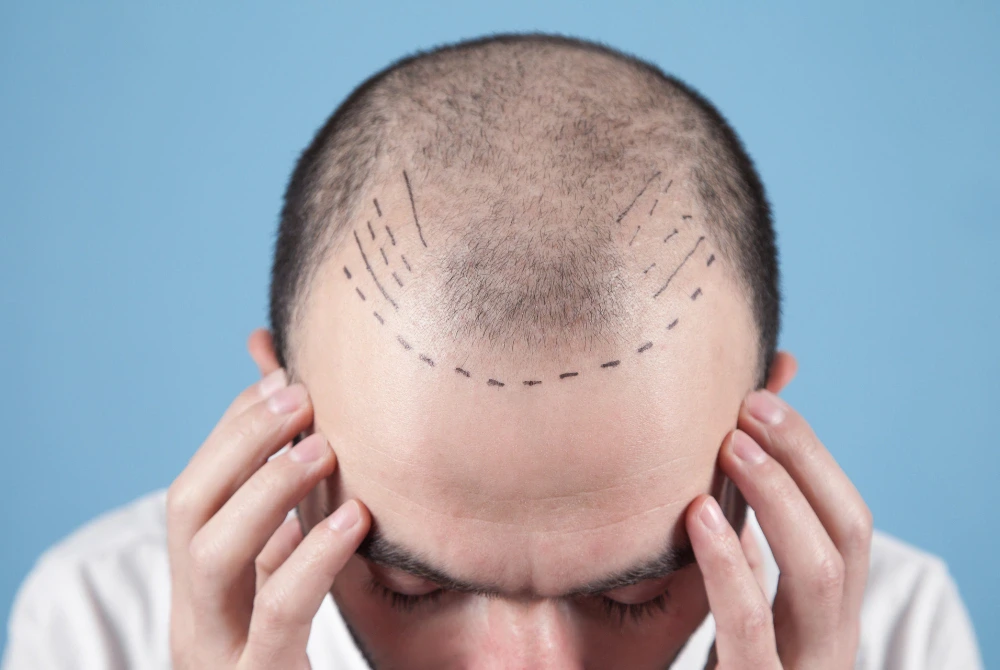
Hair Transplant Recovery Time: Week-by-Week
Although each patient’s recuperation is unique, the timeline below gives you a rough indication of what to expect.
First 24–48 Hours: The Initial Healing Stage
The most care is needed during the first two days.
Following the hair transplant procedure, the scalp may appear red or swollen. Small areas of bleeding or oozing can sometimes occur immediately after treatment, depending on the procedure and individual healing response.
The transplanted area may also feel:
- Tender
- Tight
- Sensitive
- Slightly swollen
- Numb or less sensitive in some areas
Some patients develop swelling around the forehead or upper face during the first few days. This can happen as fluid used during the procedure moves through the tissues.
Your doctor will provide specific instructions regarding washing, sleeping position, medications if prescribed, and activities to avoid.
One of the most important things during this stage is to avoid unnecessarily touching, rubbing, scratching, or putting pressure on the newly transplanted area.
The newly placed grafts need time to become secure.
What about sleeping?
Your doctor may recommend sleeping with your head elevated during the early recovery period. This can help reduce swelling and minimize accidental pressure on the treated area.
Follow the individual instructions provided by your treating doctor because recommendations can differ depending on the technique used and your particular procedure.
Days 3–7: Redness, Swelling and Scabbing
During the first week, the scalp often starts to look different from immediately after the procedure.
Small crusts or scabs can develop around the transplanted follicular units. This is typically a natural aspect of the healing process.
The donor area may also remain slightly red or sensitive.
Some patients worry when they see scabs because they believe they indicate a problem. In many cases, small crusts are simply part of normal wound healing. However, they should not be forcefully picked or scratched.
During this period, your aftercare instructions may include gentle scalp cleansing. The exact washing method and timing should be determined by your treating clinician.
You may also need to temporarily avoid activities that cause significant sweating, friction, or pressure on the scalp.
Can you go outside?
Usually, patients can gradually return to normal daily activities as healing progresses, but direct sun exposure and activities that may irritate the scalp should be limited according to your doctor’s instructions.
If you live in Islamabad, remember that outdoor exposure can be significant during warmer and sunnier periods. Protecting a healing scalp from excessive sun exposure is an important part of postoperative care.
Week 2: The Scalp Begins to Look More Normal
By the second week, many patients find that the scalp looks considerably more settled. Crusting should generally be decreasing, and much of the visible evidence of the procedure may have improved.
The donor area may also look less noticeable.
However, the transplanted hairs can still look quite short and uneven at this stage. This does not represent the outcome in the end. You may also notice some transplanted hairs beginning to shed.
This can be surprising, particularly if you expected the transplanted hair to continue growing immediately. But temporary shedding after transplantation can occur as part of the normal hair cycle and is a common part of the Hair Transplant Recovery Time.
The important point is that the visible hair shaft and the underlying follicle are not the same thing. Shedding of the transplanted hair does not necessarily mean that the follicle has been lost.
Weeks 3–4: The Shedding Phase May Become Noticeable
For some patients, the third and fourth weeks bring a stage commonly referred to as shock loss or shedding.
The transplanted hairs may fall out while the follicles remain within the scalp.
This can make the hairline or recipient area temporarily appear thinner than expected.
It is one of the psychological challenges of hair transplant recovery because the patient may think:
“I just had a transplant. Why does the hair look thinner now?”
This is where realistic expectations become important.
Hair transplantation does not usually produce a finished result immediately. The procedure places healthy follicular units into areas affected by hair loss, but those follicles require time to progress through their growth cycle.
Not everyone experiences shedding to exactly the same degree, and existing non-transplanted hair can also behave differently depending on the underlying cause of hair loss.
If you are concerned about unusual shedding or changes in the scalp, discuss them with your treating dermatologist rather than assuming the transplant has failed.
Months 2–3: The Waiting Period
The second and third months can feel slow.
After the initial healing and shedding stages, there may not be dramatic visible improvement. Patients frequently feel impatient at this moment. This does not imply that the therapy is ineffective. Hair follicles have natural growth cycles, and newly transplanted follicles need time before producing visible new hair.
During this stage, your scalp may look similar to how it did before the procedure, or you may notice subtle changes. Depending on the patient’s condition and hair loss treatment plan, a dermatologist may also recommend additional medical management to address ongoing hair loss in the non-transplanted hair.
This is important because a hair transplant moves follicles into areas of thinning or hair loss; it does not automatically stop the underlying process causing hair loss elsewhere.
Months 4–6: New Growth Becomes More Visible
For many patients, the fourth to sixth months are when the transformation becomes easier to notice.
New hairs may begin emerging from the transplanted follicles.
Initially, these hairs can be:
- Fine
- Soft
- Uneven
- Lighter than expected
- Different in texture from mature hair
This is normal for developing hair.
As the growth cycle progresses, the hairs can gradually become thicker and more mature.
Hair density also develops progressively rather than appearing all at once.
At this stage, comparing your progress with photographs taken before the procedure can be more useful than judging your appearance from day to day.
Months 7–9: Increasing Density and Maturation
Between approximately seven and nine months, many patients begin seeing more substantial changes in coverage and density. The transplanted hair may look fuller, and the hairline can start to appear more natural as the hairs mature. However, growth is not necessarily uniform.
One area may develop faster than another, and individual follicles can enter different growth phases. Hair texture may also continue changing. Patients should refrain from making snap judgments about their outcome during the Hair Transplant Recovery Time. The appearance at six months does not necessarily represent the final outcome.
Months 10–12 and Beyond: Assessing the Result
Around the one-year mark, the transplanted hair is often much more mature.
The exact timeline varies, and some patients may continue seeing changes beyond 12 months.
At this stage, your dermatologist can assess factors such as:
- Hair density
- Hairline appearance
- Direction of growth
- Donor-area healing
- Overall coverage
- Maturation of transplanted follicles
If you are considering a best hair transplant in Islamabad, discussing the expected timeline during your consultation can help you understand what is realistic for your particular pattern of hair loss.

What Happens During Hair Transplant Recovery?
Several changes can occur during Hair Transplant Recovery time. Knowing what to expect can help eliminate unneeded worry.
Redness and Mild Swelling
Temporary redness around the recipient area is common after a procedure involving multiple small sites in the scalp.
Swelling may also occur, particularly during the early days.
The duration varies from person to person.
Scabbing and Crusting
Small crusts can form around transplanted follicular units while the tiny treatment sites heal.
Do not pick them aggressively.
Your clinician should provide instructions about washing and removing crusts safely.
Temporary Hair Shedding
Shedding is one of the most misunderstood parts of the recovery process.
Some transplanted hairs can shed during the early months while the follicles remain in place and later enter a new growth phase.
For this reason, it is not appropriate to judge the outcome during the initial weeks.
Donor Area Changes
The donor area is where follicular units are taken during techniques such as FUE or FUT.
Depending on the technique and the number of grafts removed, patients may experience temporary redness, tenderness, or small marks during the early healing period.
The appearance of the donor area should also be monitored during follow-up appointments.
Does Hair Transplant Recovery Time Differ Between FUE, DHI and FUT?
Yes. The technique used can influence the recovery experience, although individual healing varies.
FUE Hair Transplant
Follicular Unit Extraction FUE hair transplant involves removing individual follicular units from the donor area before placing them into the recipient area.
Because individual grafts are extracted rather than removing a strip of scalp, there is no linear strip scar as associated with FUT. However, numerous small extraction sites still need to heal.
DHI Hair Transplant
Direct Hair Implantation (DHI) is a method of implanting follicular units using an implantation device. It is often discussed as a distinct technique, although the overall treatment approach and suitability depend on the patient’s circumstances and the clinician’s technique.
Healing of the donor and recipient regions is still a part of recovery.
FUT Hair Transplant
Follicular Unit Transplantation (FUT) involves removing a strip of skin containing hair follicles from the donor area and then preparing follicular units for transplantation.
Because the donor area involves a surgical incision, recovery and scar management can differ from FUE.
The choice between FUE, DHI, FUT, or another approach should not be based solely on which technique appears to have the shortest recovery. The appropriate method depends on factors such as donor density, hair characteristics, extent of hair loss, previous procedures, scalp condition, and the treatment goals.
Hair Transplant Aftercare: How to Support Healing
Good aftercare is an important part of the recovery process.
Your individual instructions should always take priority, but general principles may include:
Follow your washing instructions
Do not aggressively scrub the recipient area during the early healing period.
Your doctor can explain when and how to wash the scalp.
Avoid scratching or picking
Even when the scalp feels itchy, scratching can irritate healing areas.
Protect your scalp from excessive sun exposure
A healing scalp can be particularly sensitive.
Ask your doctor when it is appropriate to resume normal sun-protection practices around the transplanted area.
Avoid strenuous activity initially
Exercise and heavy physical activity can increase sweating and may cause unnecessary irritation during early recovery.
Your clinician can advise you when you can safely return to your normal exercise routine.
Take prescribed medication as directed
If your doctor prescribes medication after the procedure, use it according to their instructions.
Do not start additional medicines or supplements specifically for hair growth without discussing them with a qualified healthcare professional.
When Can You Return to Normal Activities?
Recovery timelines can vary from one patient to another, so there is no universal healing schedule.
Light daily activities may be possible relatively soon, while strenuous exercise, swimming, or activities involving significant scalp exposure may need to be postponed.
Your return to work also depends on your occupation and how comfortable you are with temporary redness or visible healing.
Someone working remotely may feel comfortable returning quickly, while a person whose job involves frequent public interaction may prefer to allow more time for visible redness and crusting to settle.
Your treating clinician should provide specific instructions based on your procedure.
When Should You Contact Your Doctor?
Some discomfort, redness, swelling, crusting, and temporary changes in the scalp can occur during recovery.
However, contact your healthcare provider if you experience symptoms that concern you, particularly if they are worsening rather than improving.
Seek medical advice if you notice signs such as:
- Severe or increasing pain
- Significant or worsening swelling
- Persistent bleeding
- Pus or unusual discharge
- Increasing warmth or redness
- Fever or feeling significantly unwell
- Other unexpected changes around the treated area
Choosing an experienced specialist and clinic can also make a difference to your overall hair restoration experience and follow-up care. If you are still deciding where to have your procedure, you may find this guide on choosing the best hair transplant clinic in Islamabad helpful.
When Will You See the Final Hair Transplant Results?
One of the most important things to understand about hair restoration is that the recovery timeline is much shorter than the hair-growth timeline.
Your scalp may look substantially healed within a couple of weeks, but new hair growth develops over several months.
A general timeline may look like this:
| Stage | What you may notice |
| First few days | Redness, tenderness and possible swelling |
| Week 1 | Crusting and early healing |
| Week 2 | Scalp becoming more settled |
| Weeks 3–4 | Possible shedding |
| Months 2–3 | Limited visible new growth |
| Months 4–6 | Early new growth becomes more noticeable |
| Months 7–9 | Increasing density and hair maturation |
| Months 10–12+ | More mature and developed result |
This information is intended as a general guide and should not be considered a guarantee.
Hair growth varies between individuals, and factors such as age, genetics, hair-loss pattern, donor quality, follicular characteristics, general health, and treatment technique can influence the outcome.
Is Hair Transplant Recovery Painful?
Most patients experience some degree of discomfort, tightness, tenderness, numbness, or sensitivity during the early recovery period.
The amount of discomfort varies.
The procedure itself is generally performed using local anesthesia, while postoperative discomfort can usually be managed according to the treatment plan provided by the clinician.
If pain becomes severe, progressively worse, or seems unusual for your stage of recovery, contact your healthcare provider.
Can Your Existing Hair Continue Thinning After a Hair Transplant?
Yes, This is an important point that patients sometimes overlook.
A hair transplant moves hair follicles into areas requiring additional coverage, but genetically susceptible non-transplanted hair can continue to thin.
For this reason, a comprehensive hair-loss assessment is important before treatment.
Your dermatologist in Islamabad may discuss medical treatments or other strategies to help manage ongoing hair loss when appropriate.
This is also why the goal of a hair transplant should not simply be to place as many grafts as possible. A long-term approach considers both the current pattern of hair loss and the future appearance of the hair.
How to Prepare for a Smoother Recovery
Being well-prepared can help make the initial days of recovery more comfortable.
Before your procedure, ask your doctor about:
- How to wash your hair after treatment
- How you should sleep
- When you can return to work
- When you can exercise
- How to protect your scalp from sunlight
- Which medications you should take or avoid
- When your follow-up appointment will occur
- What symptoms should prompt a call to the clinic
You should also understand your expected hair-growth timeline before the procedure rather than judging the result based on the first few weeks.
A consultation with a qualified dermatologist or hair restoration specialist is the best way to determine whether hair transplantation is appropriate for your particular type and stage of hair loss.
Frequently Asked Questions About Hair Transplant Recovery Time
How Long Does It Take to Recover After a Hair Transplant in Pakistan?
The initial scalp healing process commonly takes around one to two weeks, but complete recovery in the broader sense takes much longer because transplanted hair needs several months to grow and mature.
When Is It Safe to Wash Your Hair After a Hair Transplant?
The timing and washing method vary according to the procedure and your clinician’s protocol. Follow the specific instructions provided by your treating doctor rather than relying on a general online schedule.
How long does redness last after a hair transplant?
Redness is usually more noticeable during the early healing period and gradually improves. The duration varies according to individual skin response, treatment area, technique, and other factors.
When does transplanted hair start growing?
Visible new growth often becomes more noticeable several months after transplantation. Growth commonly becomes easier to appreciate between approximately four and six months, although individual timelines differ.
Is Hair Shedding Normal After a Hair Transplant?
Temporary shedding can occur after transplantation. This does not necessarily mean the transplanted follicles have been lost. If shedding appears unusual or is accompanied by concerning symptoms, speak with your treating doctor.
Can I exercise after a hair transplant?
Strenuous exercise is generally restricted during the early recovery period, but the exact timeframe depends on the procedure and your individual healing. Your clinician should tell you when it is appropriate to resume exercise.
When can I return to work after a hair transplant?
This depends on your occupation, the extent of the procedure, and how quickly visible redness and swelling settle. People working from home may return to routine activities sooner than those whose work requires frequent public interaction.
Does FUE have a shorter recovery than FUT?
The recovery experience can differ because FUE and FUT involve different donor-area procedures. FUE uses individual follicular-unit extraction, whereas FUT involves removal of a strip of scalp. Your doctor can explain which approach is suitable for you and what recovery to expect.
How long until a hair transplant looks natural?
A natural-looking result develops progressively. Early transplanted hairs may be fine or uneven, while density and texture can continue improving over many months. Final assessment is often made around the one-year mark or later, depending on individual growth.
Final Thoughts
Understanding hair transplant recovery time is just as important as understanding the procedure itself. The first few days are focused on protecting the scalp and allowing the tiny treatment sites to begin healing. During the first couple of weeks, redness, crusting, tenderness, and other temporary changes can gradually settle. Some patients then experience a shedding phase before new growth begins.
The more visible transformation generally happens over the following several months as transplanted follicles produce new hair and gradually mature. Most importantly, try not to judge your result too early. Hair restoration is a gradual biological process, not an overnight change.
If you are considering hair transplant treatment in Islamabad, a personalized consultation can help determine whether transplantation is appropriate for your hair-loss pattern, what technique may be suitable, how many grafts may be required, and what recovery timeline you can reasonably expect.
At Restore Skin by Dr. Namrah Aziz in DHA Phase 2, Islamabad, patients can discuss their hair-loss concerns and treatment goals with a qualified medical professional before making a decision. An individualized assessment is essential because the right approach depends on your scalp, donor hair, pattern of hair loss, and long-term restoration goals. A carefully planned hair restoration treatment should focus not only on the procedure itself, but also on realistic expectations, appropriate aftercare, and the long-term health and appearance of your hair.
If you’re considering a hair transplant and would like to understand which option may be right for you, reach out to Dr. Namrah Aziz at Restore Skin. WhatsApp 0345 6892230 to discuss your concerns and book a consultation.